
Luis Cásedas
Centro de Investigación Mente, Cerebro y Comportamiento, Universidad de Granada, España
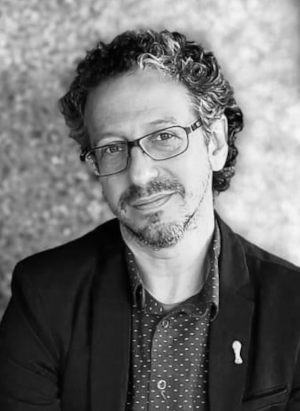
(cc) Tristan Bekinschtein.
Tristan Bekinschtein is Professor of Consciousness and Cognition at the University of Cambridge, where he directs the Consciousness and Cognition Lab. Originally trained as a biologist, his research applies non-classical neurocognitive approaches to illuminate the dynamics of consciousness. In this interview, I talk with Dr. Bekinschtein about ‘Temporal Experience Tracing’ (TET), a neurophenomenological technique pioneered by his team to assess how brain activity and lived experience unfold together over time. The conversation explores TET’s origins, validation, and use across basic and applied research settings—from making sense of psychedelic states to improving the treatment of psychiatric disorders.
Question – Your career begins not in cognitive science but in biology. What first drew you to biology, and what later steered you toward the study of the mind?
Answer – As a teenager, I was interested in absolutely everything. At school I chose chemistry because it gave you the opportunity to study not just chemistry but also mathematics, physics, biology, microbiology… And I found biological systems the most fascinating, the culmination of all that complexity. So I decided to study biology, and two years in I realized that the frontiers of biology that interested me most were really about how living systems give rise to behavior. From there, I naturally fell into the most complex behavior of all: thought and consciousness.
Q – At the Consciousness and Cognition Lab you take very seriously an aspect that is often overlooked in psychological research, subjective experience, adopting an approach rooted in ‘neurophenomenology’. What is neurophenomenology, and where does it come from?
A – Phenomenology is the study of first-person experience: how we think what we think and feel what we feel. The classic question is how what happens inside the brain becomes those experiences. In the 1990s, psychologists, neuroscientists, and philosophers began to discuss this question, which gave rise to neurophenomenology: the quest to connect the biological perspective with the first-person perspective.
Q – Your lab has developed an experimental technique within this research framework, known as Temporal Experience Tracing (TET). What does it involve?
A – When we started working in neurophenomenology, we quickly realised that no fully satisfactory technique was available. Classic phenomenological approaches rely on qualitative methods, like interviews, which are difficult to connect with measures from cognitive psychology and neuroscience. On the other hand, if you use a method that interrupts someone while they are engaged in a given activity—say, playing the piano—to ask them about their experience in that moment, you disrupt the very experience you are trying to study. And if you only ask afterward, using a self-report measure or questionnaire, you lose the nuances of how the experience evolved over time.
So what TET does—sticking to the piano example—is ask participants to draw a line tracing how they felt across different dimensions of experience, such as joy, flow, or anxiety, from the moment they began playing to the moment the piece ended. In this way, we capture the trajectory of experience in a manner that, while less detailed than classical phenomenological approaches, is both quantitative and continuous over time. This, in turn, enables us to establish rich mathematical relationships between these experiential dimensions and the dynamics of the brain, which we measure in parallel using techniques such as electroencephalography.
Q – One area where you have applied TET is that of altered states of consciousness. What are these states?
A – There are various definitions, but they generally refer to states where conscious experience deviates qualitatively from our usual mode of perceiving the world, not through everyday physiological fluctuations, such as during sleep, but through more unusual perturbations. For example, what happens under hallucinogens is clearly an altered state: you perceive things that aren’t there but internally generated, driven by pharmacological processes. And the pharmacological route is not the only one. If during surgery a patient’s brain is stimulated with an electrode, for example, to localize an epileptic focus, they may perceive stimuli that don’t exist externally: mental content generated entirely by their own brain. And there are much simpler routes too, such as certain breathing techniques or high-intensity physical exercise. All these extreme physiological regimes produce distinct spaces of consciousness that we refer to as altered states.
Q – What dimensions of experience do you measure in these studies?
A – We try to capture aspects of experience related both to the effort involved in reaching the state and to the features of experience that we expect to be altered. For example, the sensation that one has lost the boundaries of the body. This is common with many psychedelics, but it can also occur through certain breathing practices, often referred to as ‘breathwork’, as well as through certain forms of meditation. Other dimensions are more complex. For example, the sensation that there is another presence, that someone or something is with you; or ego dissolution, the feeling of losing one’s sense of self. These kinds of experiences, which would be extraordinarily rare in an ordinary state of consciousness, are not uncommon in altered states. And there are also positive sensations, such as a feeling of floating, associated with pleasure, though not physical pleasure in the conventional sense, but rather a blend that sits somewhere between the cognitive, the emotional, and the physiological. All these aspects are captured quite effectively by TET, better than by the classical questionnaires used to assess altered states.
Q – One might expect a technique like TET, which relies on introspection, to work well with meditators, for example, since they have developed that ability. But during a psychedelic experience, such as the one in your study with DMT (Lewis-Healey et al., 2026), where meta-awareness is profoundly altered, does the technique remain reliable?
A – It’s a pertinent question. We had to work hard before we could trust what our participants reported about their psychedelic experience, though in the end we solved the problem in a surprisingly simple way. When you are in a DMT trip, you lose all sense of whether two minutes, two hours, or two days have passed. So we decided to play participants a sound, a beep, every two minutes throughout the experience, to give them a temporal reference. And although they were surprised that only two, four, six minutes had passed, because their subjective experience felt much longer, the sound gave them an anchor. This worked very well, as we found that we could predict what participants drew, their experience traces, from their brain activity. For me, that’s the strongest validation possible: if the technique hadn’t worked, brain activity wouldn’t have been able to predict the dynamics of the traces. But it did, and with precision. So we began to trust TET even in deeply altered states.
Q – Staying with the brain, contemporary consciousness research is placing increasing emphasis on measures derived from information theory, such as complexity and entropy, which your team also uses. What do these measures allow us to quantify, and how do they relate to more traditional measures of brain activity?
A – There is a tendency among neuroscientists to assume that, because complexity measures derive from information theory, they allow us to measure information in the brain, which must have immediate interpretive implications for the mind. That is low-quality epistemology and theoretical methodology. Something similar happened in the past with oscillations. For several decades it was thought that the brain functioned essentially through oscillations: higher frequency, lower frequency, and so on. But a complex system like the brain doesn’t communicate solely in this way. It’s like the ocean: you cannot model it by considering only the waves. Waves are a fascinating minor effect that you can clearly see from the shore, but they don’t represent the ocean itself.
The alternative is to account for both the oscillatory aspects, the waves, and those that are not: currents, fluctuations, complex dynamics. And we can capture that complexity mathematically using entropy measures, which, broadly speaking, allow us to quantify the system’s degree of disorganization. To these measures we add others of connectivity between different regions of the brain, as well as the combinations of all of them, to examine whether and how they relate to psychological or cognitive variables, such as the experience traces. In this way, by keeping the interpretability between brain and mind more open, one has a greater chance of finding genuine correspondences. But we must avoid the leap of claiming that entropy is the brain’s information, as that would repeat the mistake of those who claimed that everything was waves.
Q – You have spent more than two decades investigating the relationship between brain and mind. How has the field changed over that time, and where do you think it’s heading?
A – It’s encouraging to see that a genuine conceptual interdisciplinarity is finally emerging. Psychologists and neuroscientists are beginning to find a common language. The new generations of PhD students and postdoctoral researchers no longer conceive of psychology and neuroscience as separate domains, and their training in computation and network science allows them to understand how phenomena across levels of analysis are interconnected in complex ways. I’m optimistic.
Q – To conclude, let’s step outside the lab for a moment. You have just launched Human Experience Dynamics. What is this initiative about?
A – Human Experience Dynamics is a spin-off from the University of Cambridge that I co-founded with Dr. Barbara Jachs. It’s not a conventional for-profit company, but rather an initiative that allows us to apply our research tools in clinical trials with the aim of generating a direct societal impact beyond the purely academic. We are currently applying it to projects on chronic pain, anxiety, post-traumatic stress, sleep disorders, and memory problems associated with Alzheimer’s disease. Alongside TET, we use portable electroencephalography and collect data over several days in the patient’s everyday environments, which allows us to adopt a personalized medicine approach. We are still at an early stage, but I believe that turning a methodologically complex research idea into something tangible and clinically useful is the best way to do translational cognitive neuroscience, and, in this case, a path for neurophenomenology to have real-world impact.
The interview has been edited for length and clarity.
References
Lewis-Healey, E., et al. (2026). Time-resolved neural and experience dynamics of medium-and high-dose N, N-Dimethyltryptamine. Journal of Cognitive Neuroscience, 38, 1244–1263.
To find out more
Human Experience Dynamics (website)
Manuscrito recibido el 27 de mayo de 2026.
Aceptado el 28 de mayo de 2026.
This is the English version of
Cásedas, L. (2026). Dibujando el contorno de la experiencia: Entrevista con Tristan Bekinschtein. Ciencia Cognitiva, 20:2, 30-33.
